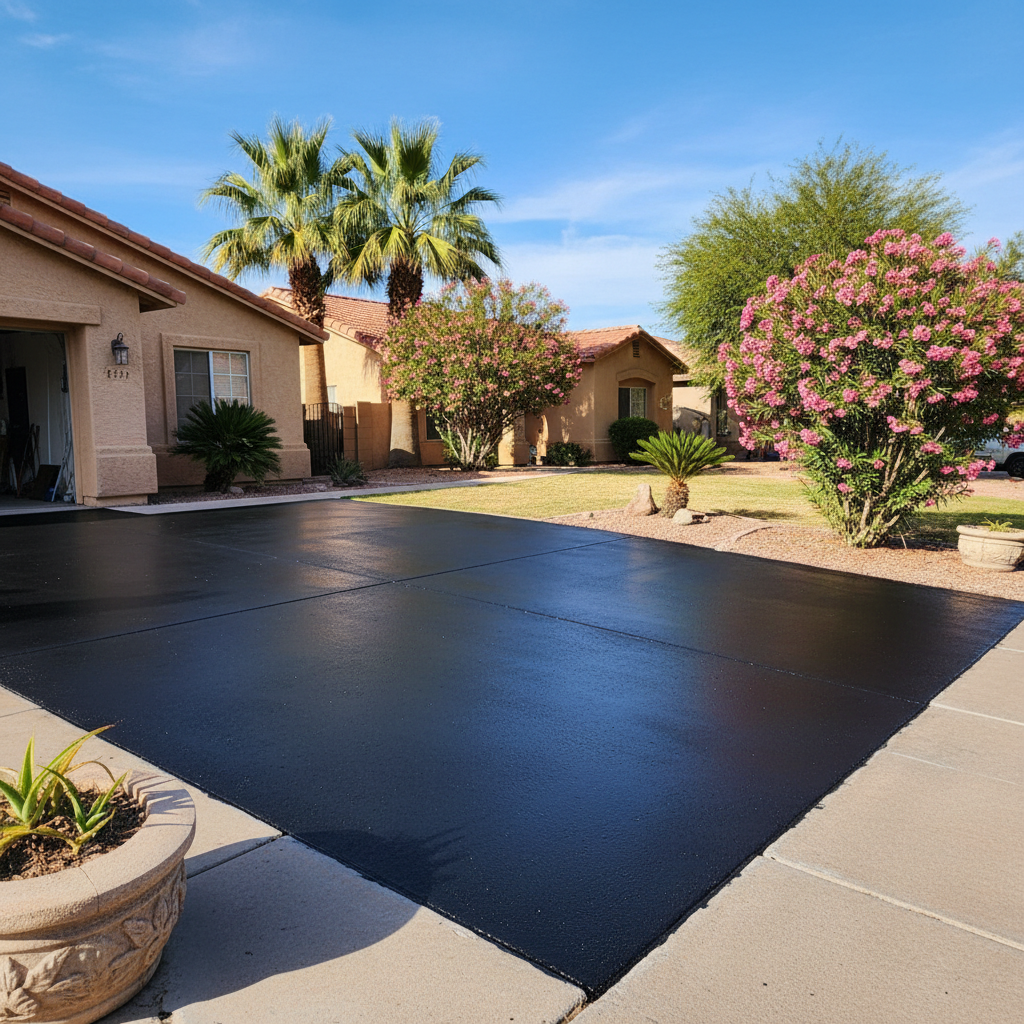
So, you just put down a slurry seal on your asphalt, and wow, it looks amazing, right? That deep black finish, those super crisp lines – it's a real step up. But let's be honest, here in Phoenix, that fresh coat is about to face some serious battles. Our brutal sun, those monsoon downpours, and the constant temperature swings are just plain tough on pavement. So, how do you make sure your investment actually lasts as long as possible? It's not rocket science, but it does take a little know-how and some consistent effort.
Making Your Slurry Seal Last Longer in the Desert
Think of your slurry seal like a protective skin for your asphalt. Its job is to keep water out, slow down how fast UV rays cause oxidation, and just give you a fresh, even surface. To get the most out of it, you've really got to be proactive. The biggest enemy here, no question, is the sun. Our 300+ sunny days aren't just great for tourists; they're constantly baking your pavement.
First things first, make sure the initial application was done correctly. That means the surface was prepped right, they used the proper mix for our climate, and it cured well. If you hired someone like Peak Asphalt Co, you're already ahead of the curve because, frankly, we know what works out here. Once it's down, the trick is to keep stress off that new surface. This means:
- Keep it Clean: Dirt, sand, and other debris basically act like sandpaper when cars drive over them. Sweep or blow off your lot regularly, especially after a dust storm or if we've had some heavy winds.
- Manage Water: Slurry seals do protect against water, sure, but standing water is still a bad sign. Make sure your drainage is doing its job. If you're seeing puddles, that's a problem you need to sort out. Water seeping under the asphalt can mess with the base, and that leads to cracks and potholes no slurry seal can fix.
- Control Chemicals: Oil, gas, and other car fluids? They're solvents. Over time, they'll break down the binder in your slurry seal. Clean up any spills right away. Don't just let them sit there and soak in.
- Limit Heavy Loads: A slurry seal is tough, but it wasn't designed for constant heavy truck traffic or those really tight turning movements. If you have spots with high stress, like loading docks or dumpster pads, they might need more frequent attention — or maybe even a different solution entirely.
Regular Maintenance: What You Should Be Doing
This isn't about calling a contractor every single month; it's more about you staying on top of things yourself. Most regular maintenance involves just looking around and doing some basic cleaning.
Walk your property once a month, or at least every other month. Really take a good look at the surface. Are there any new stains popping up? Any tiny cracks starting to form? Does the color still look consistent, or are there faded spots? For smaller properties, a leaf blower and a stiff broom are your best buddies. If you've got a bigger lot, a power sweeper might be a smart investment, or you could hire a service to come in periodically.
And don't forget about plants. Weeds pushing through cracks will just make them wider, letting water get in and cause damage. Pull them out or treat them. It's way easier to deal with a few small weeds than a whole patch trying to take over your asphalt.
Warning Signs: When Something's Not Right
Your slurry seal will definitely tell you when it's unhappy. You just need to know what to look for, right? These are signals that you might have a bigger problem brewing, or that it's time to get some professional help:
- Fading or Graying: If your nice black surface starts looking gray or dull, especially in high-traffic spots or areas constantly hit by the sun, that's a sign the UV rays are doing their damage. It means the top layer is oxidizing and losing its protective qualities.
- Hairline Cracks Spreading: A few tiny cracks might be normal as the pavement flexes, but if you see them spider-webbing or getting longer and wider, that's a red flag. These are basically open doors for water.
- Loose Aggregate or Pitting: If you're noticing small stones or sand coming loose from the surface, or if little depressions are forming, the slurry seal might be breaking down. This can happen from bad adhesion, heavy traffic, or just plain old age.
- Potholes or Depressions: Now, this is a more serious issue. If you're seeing actual potholes or significant dips, the problem is probably underneath the slurry seal, in the asphalt base itself. The slurry just can't fix structural problems.
- Water Pooling: Again, if water is consistently pooling in certain spots after a rain, that points to a drainage issue or a dip in the pavement that needs some attention.
When to Call a Professional
You don't need to call us every time you spot a stray pebble, obviously. But there are definitely times when professional help is a good idea. If you notice any of those serious warning signs – widespread cracking, significant fading, loose aggregate, or structural issues like potholes – it's time to get an expert opinion. Don't wait around until a small problem turns into a massive, expensive repair.
We can come out, assess the situation, and tell you if it's a minor fix or if it's time for another slurry coat. Sometimes, a small patch and crack fill can buy your existing seal another year or two. Other times, the existing slurry might be too far gone, and you'll need a fresh application. We'll give you an honest assessment. Here at Peak Asphalt Co, we’ve pretty much seen it all, from the scorching summers to the occasional flash floods that can really wreak havoc on pavement, especially in areas with caliche soil. We know what it takes to keep your asphalt looking good and performing well for years to come.
Think of it like going to the doctor. Regular check-ups are smart, but if you've got a persistent ache, you don't just ignore it, do you? Your asphalt is a valuable asset; treat it that way.