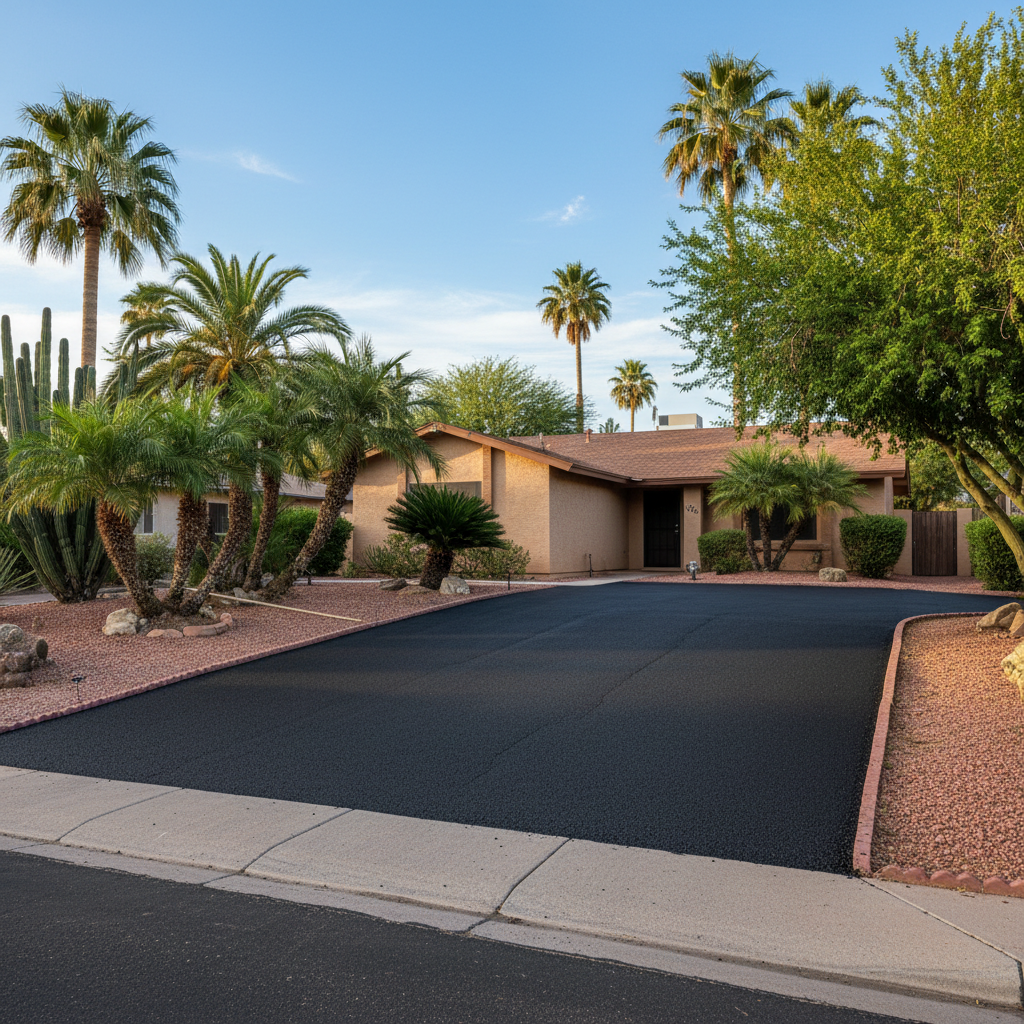
Thinking about a new asphalt driveway? Or maybe you're finally ready to tackle that cracked-up mess you've been living with? Good for you. It's a big investment, and you're smart to want the full picture. I hear from folks all over Phoenix all the time, asking, "What's this going to cost me?" There's no single, simple answer, but I can definitely walk you through what drives the price and what you should expect.
What Really Drives the Cost of Residential Asphalt Paving Here in Phoenix?
Look, a lot goes into pricing a paving job. We're not just slapping down some blacktop, you know? Here's what we, as contractors, consider when we put your quote together:
- Size, obviously: This is the big one. A small patch job is totally different from paving a long, winding driveway out in, say, North Scottsdale. We measure in square feet, and the bigger the area, the more material and labor it'll take.
- Existing Condition: Is this a brand-new installation on virgin dirt? Or are we tearing out an old, crumbling concrete driveway? Sometimes it's just a resurface over existing asphalt that still has a good base. Demolition and removal add significant cost and time. And if we have to deal with a lot of caliche soil, that's another factor; it requires more prep work to ensure a stable base.
- Thickness of the Asphalt: For most residential driveways, you're usually looking at 2 to 3 inches of compacted asphalt. But if you've got heavier vehicles, like an RV or a work truck, you might need 3-4 inches. More material means a higher price, plain and simple.
- Base Preparation: This is probably the most critical part of any paving job. And frankly, it's where a lot of less reputable contractors cut corners. A solid, well-compacted aggregate base (usually 4-8 inches thick) is what gives your driveway its strength and longevity. If that base isn't right, your asphalt won't last, no matter how good the top layer is. This involves grading, compacting, and sometimes even adding soil stabilizers.
- Accessibility: Can our big equipment get in and out easily? If we're working in a tight space or have to haul materials a long way, that adds to the labor cost. It just does.
- Drainage: Proper drainage is non-negotiable, especially with our monsoon rains. We need to make sure water flows away from your house and doesn't pool on the driveway. This might mean grading, installing drains, or even building up certain areas.
- Edging and Borders: Do you want a clean, defined edge? Or are you okay with a simple feathered edge? Concrete curbing or pavers for edging will definitely add to the cost.
Typical Cost Ranges for Phoenix Residential Asphalt
Alright, let's get down to some actual numbers. Keep in mind these are general ranges, and your specific project could be higher or lower depending on those factors I just mentioned.
For a new asphalt driveway installation (this includes excavation, base prep, and 2-3 inches of asphalt), you're generally looking at:
- Small Driveway (e.g., 400-600 sq ft): $3,000 - $6,000
- Standard 2-Car Driveway (e.g., 600-1,000 sq ft): $5,000 - $9,000
- Larger or Custom Driveway (e.g., 1,000-2,000+ sq ft): $8,000 - $15,000+
These figures typically translate to about $4.00 to $9.00 per square foot for a complete tear-out and replace, or a new installation on a prepared subgrade. If you're just doing an asphalt overlay (resurfacing over an existing, stable asphalt driveway), it can be more like $2.50 to $4.50 per square foot. That's because we're skipping a lot of the base work.
Patching and repair jobs are usually priced by the square foot for the repair area, plus a mobilization fee. Small patches might be a few hundred bucks, while larger, more complex repairs could run into the thousands. Who knew?
What Should Your Quote Include?
When you get a quote from Peak Asphalt Co or any other reputable company, make sure it's detailed. You want to see:
- Scope of Work: It should clearly state what's being done. Is it a tear-out, a new install, or an overlay?
- Measurements: The total square footage of the paved area.
- Material Specifications: The type and thickness of the aggregate base, plus the type and compacted thickness of the asphalt.
- Prep Work: Details on excavation, grading, compaction, and any necessary drainage solutions.
- Cleanup and Disposal: Confirmation that all debris will be removed from your property.
- Warranty: What kind of guarantee are they offering on their work?
- Timeline: An estimated start and completion date.
Don't just look at the bottom line. A cheap quote often means corners are being cut, and that'll cost you more in the long run. Trust me on this one.
How to Avoid Overpaying (and Getting Ripped Off)
This is where you need to be smart. Here are my top tips:
Paving your driveway is a significant investment in your home. Do your homework, ask the right questions, and choose a contractor who prioritizes quality and stands behind their work. You'll be glad you did when your asphalt lasts for years, even under the brutal Phoenix sun.