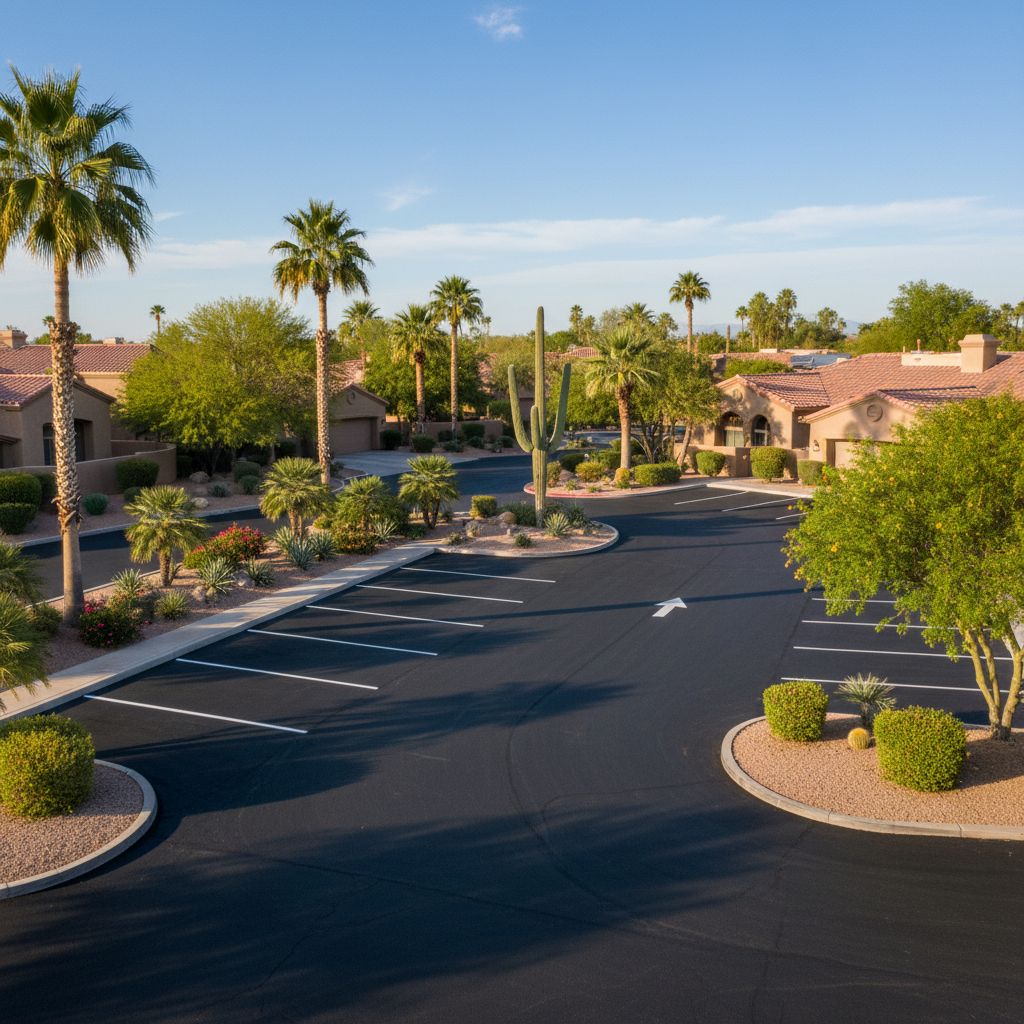
So, you're eyeing a commercial asphalt project for your property right here in Phoenix. Maybe it’s a shiny new parking lot for your business, or perhaps you're finally tackling those cracked, faded areas that have become a real eyesore – and honestly, a bit of a liability. Whatever the reason, you've got a significant investment coming up, and you want to make sure everything goes off without a hitch. I totally get it. I've been in this business a long time, and I’ve seen what happens when folks don't plan ahead. Let's chat about how to get this job done right.
Understanding Your Project's Timeline
One of the first things people always ask me is, "How long will this take?" It's a fair question, no doubt, but there isn't a single, simple answer. A small patch job, for instance, is obviously much quicker than tearing out and replacing an entire parking lot. Generally, though, you'll go through a few main phases, and each one needs its own time.
- First Contact & Site Visit: This is where everything kicks off. We'll come out to your property, take some measurements, and talk through exactly what you need. This usually happens pretty fast, sometimes within a day or two of your call.
- Proposal & Contract: After we've visited the site, we'll put together a detailed proposal for you. This might take a few days, especially for complex jobs where we need to get specific material quotes. Once you have it, please, take your time to review it carefully. No need to rush this part.
- Scheduling: Once that contract is signed, we'll get you on the books. This is where timing can really vary. Our schedule fills up, particularly during Phoenix's cooler months when everyone wants work done before the summer heat really sets in. You could be looking at a few weeks out, or even a month or two for bigger projects during our busiest times.
- Permitting (If You Need It): For larger commercial projects, especially new construction or big expansions, you might need city permits. This isn't always the case for simple overlays or repairs, but if it is, that will add some time to the process. Phoenix’s permitting process can be quite efficient, but it still takes a bit.
- Construction: This is the actual work itself. Depending on how big the job is, this could be a day or two for smaller tasks, or a week or more for a large parking lot. We're talking about digging, grading the ground, laying the asphalt, and then striping it.
- Curing Time: After we lay the asphalt, it needs time to harden before heavy traffic drives on it. We'll give you precise instructions, but generally, you'll want to keep vehicles off it for at least 24-48 hours, sometimes a bit longer if heavy trucks will be using it.
So, from your very first phone call to finally driving on your brand-new asphalt, you might be looking at anywhere from a couple of weeks to a couple of months. It truly depends a lot on the project's size and how busy we are at the moment.
What to Expect While We're Working
When we're on site, it's going to be a construction zone. You'll see heavy equipment – pavers, rollers, dump trucks – and you'll definitely hear some noise. We’ll do our absolute best to keep disruptions to your business and customers to a minimum, but some level of disruption is unavoidable. We'll typically rope off work areas for safety. You might find certain parts of your property have limited access temporarily. We'll make sure to tell you all this beforehand so you can plan for it.
Our crew will be working hard, often starting early to beat some of that intense Phoenix heat. We're professionals, and our main focus is getting the job done right and safely. You'll see us getting the ground ready, laying down the hot asphalt, and then compacting it. It's actually a pretty impressive process to watch, if you ask me.
How to Get Your Property Ready
Before we even show up, there are a few things you can do to make our job easier and keep your project moving smoothly:
- Clear the Area: Move anything that's in our way – vehicles, dumpsters, outdoor furniture, signs. If it's not bolted down, just move it.
- Notify Tenants/Customers: If you have tenants or regular customers, give them plenty of warning about the work, which areas will be affected, and for how long. Provide alternative parking if that's needed.
- Mark Utilities: We're always careful, but it's smart to clearly mark any private utility lines (like irrigation, or electrical for signs) that aren't usually marked by 811. We'll call 811 for public utilities, but those private ones are your responsibility.
- Secure Valuables: If there are any sensitive items close to the work zone, make sure they're safe. Dust and debris are just part of the process.
Questions to Ask Before Signing a Contract
This is a really big one. Don't just sign the first thing someone puts in front of you. You absolutely have to ask questions. Here are a few I'd suggest:
- What's actually included in the price? Get a really detailed breakdown. Does it cover digging, hauling away old material, preparing the base, the asphalt itself, and striping? Are there any allowances for unexpected problems?
- What kind of asphalt are you planning to use? There are different mixes out there. For Phoenix, we often use mixes specifically designed to handle our extreme temperatures. You want to be sure it's the right type for your traffic load and our climate.
- What kind of warranty do you offer? A good company like Peak Asphalt Co will stand behind their work. Make sure you understand what’s covered and for how long.
- Do you handle the permits? If permits are necessary, clarify who is responsible for pulling them.
- What's the payment schedule like? Most contractors will ask for a deposit upfront, with progress payments or a final payment once the job is done. Understand those terms.
- Can you give me some references? Ask for contact information for a few recent commercial clients. Don't just rely on online reviews; actually talk to people.
- How do you plan to keep disruptions to a minimum? This is especially important for businesses that need to stay open. How will they manage access, noise, and dust?
- What are the estimated start and completion dates? Get this in writing, but also understand that weather or unforeseen issues can cause small delays.
- Are you licensed and insured? This isn't optional. Ask for proof of both. You really don't want to be liable if something goes wrong.
Taking the time to plan and ask these questions upfront will save you a ton of headaches later on. A good contractor wants you to be informed and happy with the whole process. We're not just laying asphalt, you know; we're building a relationship. So, make sure you feel comfortable with who you're working with.